
How Does a Washing Machine Solenoid Valve Open and Close the Water Supply?
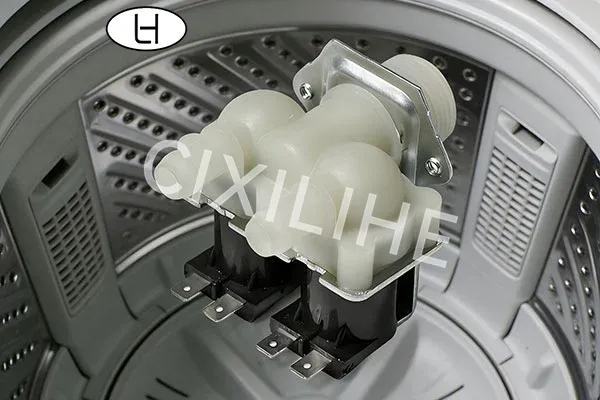
When a washing machine starts a fill cycle, the control board sends a voltage signal to a small solenoid coil mounted on the inlet valve. The coil energizes, a magnetic field pulls a plunger, and a diaphragm lifts to let water flow into the drum. When the pressure switch detects the target water level, the control board removes the voltage, the magnetic field collapses, a spring returns the plunger, and the diaphragm reseats against the valve port to stop the flow. This open-and-close cycle repeats many times during a wash program, and it is the basic mechanism that regulates the water supply in every modern washing machine. For a procurement team sourcing Washing Machine Inlet Valves, understanding this mechanism is the starting point for evaluating reliability, response time, and leakage performance.
The valve is a small component, but it sits at the boundary between the household water supply and the appliance. A valve that opens slowly can extend the fill time. A valve that closes incompletely can drip into the drum. A valve that fails to open can stop the machine. These behaviors are determined by the coil design, the diaphragm geometry, the spring force, the orifice size, and the material selection. This article explains how the valve opens and closes, how different designs behave, which specifications matter for procurement, which failure modes affect reliability, and how buyers can verify performance before placing an order. Our factory at Cixi Lihe Electric Appliance Co., Ltd. manufactures Washing Machine Inlet Valves for appliance OEMs and aftermarket distributors, and the guidance below reflects the engineering and procurement questions we address with our customers.
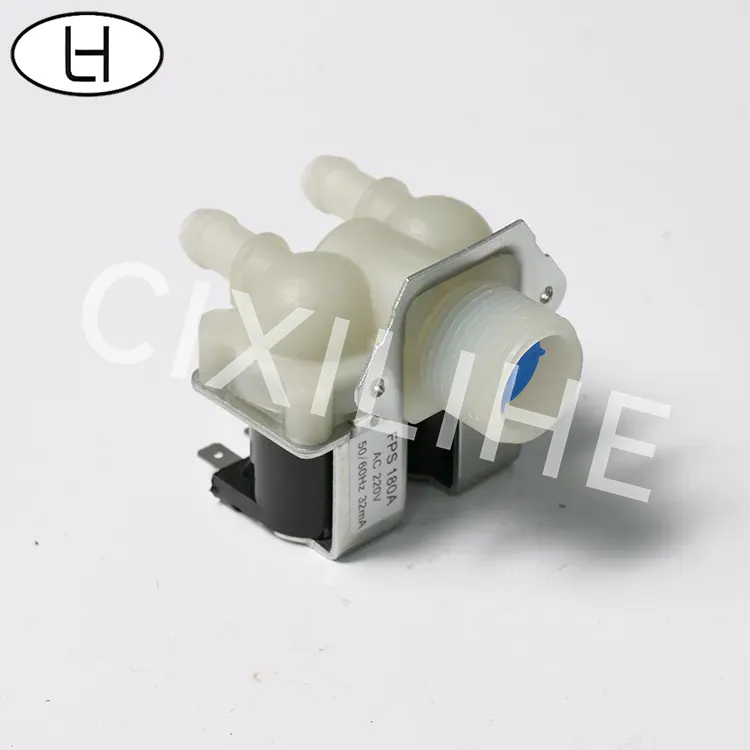
Table of Contents
- 1. What Happens Inside a Washing Machine Inlet Valve When It Opens?
- 2. How Does the Valve Close and What Keeps It Sealed?
- 3. Why Do Different Valve Designs Open and Close Differently?
- 4. Which Specifications Should Buyers Check for Open and Close Performance?
- 5. What Failure Modes Affect Opening and Closing Reliability?
- 6. How Can Buyers Verify Opening and Closing Reliability Before Ordering?
- 7. Frequently Asked Questions (FAQ)
- 8. Conclusion
1. What Happens Inside a Washing Machine Inlet Valve When It Opens?
The opening action of a Washing Machine Inlet Valve begins with the solenoid coil. The coil is wound around a stationary core, and inside the core sits a movable plunger. When the control board applies voltage, current flows through the coil and generates a magnetic field. The field pulls the plunger toward the core, and the plunger movement opens a small pilot passage in the diaphragm assembly. This pilot passage allows water pressure to equalize across the diaphragm, and the diaphragm lifts away from the main valve seat. Water then flows from the inlet port through the outlet port into the machine.
The opening action is not a simple mechanical push. It is a pressure-assisted process. The diaphragm is held closed by the inlet water pressure and by a return spring. The solenoid only has to overcome the pilot passage, not the full main orifice. Once the pilot opens, the pressure difference does the work of lifting the diaphragm. This is why a relatively small coil can control a large flow passage. The table below describes the internal components and their role in the opening action.
| Component | Role in Opening | Material Consideration |
| Solenoid coil | Generates the magnetic field that pulls the plunger | Copper winding, insulation class, thermal rating |
| Plunger and core | Convert magnetic force into mechanical movement | Corrosion-resistant steel, smooth surface |
| Pilot passage | Allows pressure equalization across the diaphragm | Precision molded orifice, burr-free |
| Diaphragm | Lifts to open the main flow path | EPDM or silicone, flex fatigue resistance |
| Return spring | Provides the closing force when the coil is de-energized | Stainless steel, consistent spring rate |
| Inlet and outlet ports | Direct water flow into and out of the valve | Engineering plastic, thread accuracy |
Our factory at Cixi Lihe Electric Appliance Co., Ltd. controls the opening performance of our Washing Machine Inlet Valves by specifying the coil wire diameter, the plunger surface finish, the pilot orifice size, and the diaphragm compound. We test the opening response at the rated voltage and at the minimum operating voltage to confirm that the valve opens reliably across the supply range. The goal is to provide a valve that opens quickly and consistently in the appliance.
For a buyer, the opening action is a performance characteristic that should be specified in terms of response time and minimum operating voltage. A valve that opens only at the nominal voltage may fail in a household with a low supply. A valve that opens slowly may extend the fill time. The procurement specification should state the opening time and the voltage range, and the supplier should provide the test data to support the claim.
2. How Does the Valve Close and What Keeps It Sealed?
The closing action begins when the control board removes the voltage from the solenoid coil. The magnetic field collapses, and the return spring pushes the plunger back to its rest position. The plunger closes the pilot passage, and the pressure on the back of the diaphragm builds up again. The inlet pressure and the spring force push the diaphragm against the main valve seat, and the flow stops. The closing action is therefore a combination of spring force, inlet pressure, and diaphragm elasticity. The seal is maintained by the diaphragm pressing against the seat, and the quality of the seal depends on the diaphragm material, the seat geometry, and the surface finish.
The timeline below describes the closing sequence in a typical washing machine fill cycle.
- Step 1 — Signal removal: The pressure switch reaches the target level, and the control board removes the voltage from the coil.
- Step 2 — Field collapse: The magnetic field decays within milliseconds, and the plunger is released.
- Step 3 — Pilot closure: The return spring pushes the plunger onto the pilot passage, stopping the pressure equalization.
- Step 4 — Diaphragm reseat: The pressure on the back of the diaphragm rises, and the diaphragm moves toward the seat.
- Step 5 — Main seal: The diaphragm contacts the seat and compresses slightly, creating a watertight seal.
- Step 6 — Stabilization: The valve remains closed until the next fill command, and the seal is maintained by the inlet pressure and the spring force.
Our factory at Cixi Lihe Electric Appliance Co., Ltd. specifies the return spring rate and the diaphragm compression set to ensure that the closing action is fast and the seal is stable. We test the closing time and the seat leakage on every production batch. The goal is to provide a valve that closes completely and does not drip after the fill cycle ends.
For a buyer, the closing action should be specified in terms of closing time and leakage rate. A valve that closes slowly may allow the drum to overfill. A valve that does not seal may cause a slow drip that wastes water and damages the appliance. The procurement specification should state the closing time and the maximum leakage rate, and the supplier should provide the test data to support the claim.
3. Why Do Different Valve Designs Open and Close Differently?
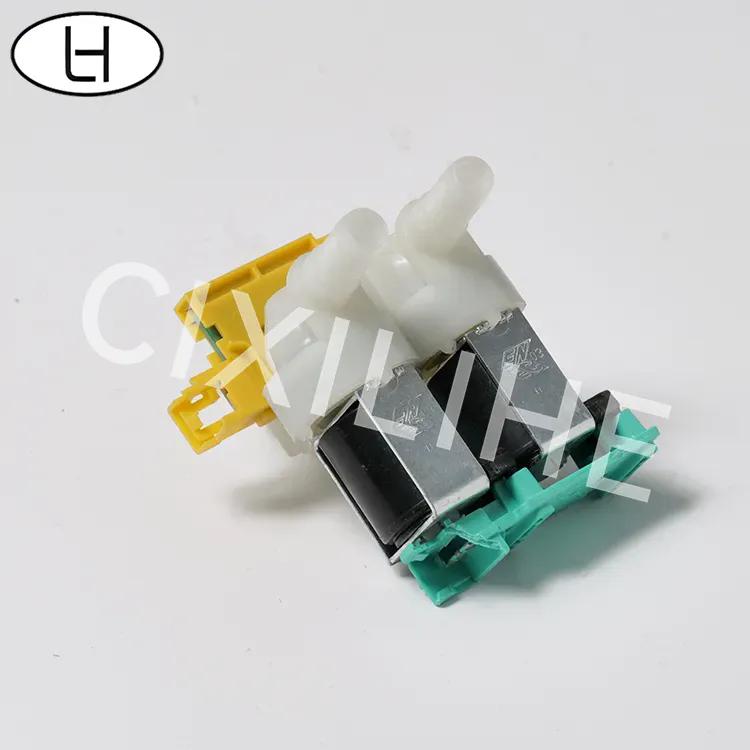
Different Washing Machine Inlet Valve designs open and close differently because they use different actuation principles and different flow paths. The three most common designs are the direct-acting valve, the pilot-operated valve, and the dual-head valve. A direct-acting valve uses the solenoid force to lift the diaphragm directly. It is simple and reliable, but it requires a larger coil to overcome the full inlet pressure. A pilot-operated valve uses the solenoid to open a small pilot passage, and the pressure difference lifts the diaphragm. It allows a smaller coil and a larger flow, but it requires a minimum pressure differential to close reliably. A dual-head valve combines two independent valve sections in one body, allowing the machine to control hot and cold water separately or to provide two flow rates. The table below compares the designs.
| Design | Opening Mechanism | Closing Mechanism | Typical Application |
| Direct-acting | Solenoid lifts diaphragm directly | Spring and inlet pressure reseat diaphragm | Low-pressure or low-flow machines |
| Pilot-operated | Solenoid opens pilot, pressure lifts diaphragm | Spring closes pilot, pressure reseats diaphragm | Most household washing machines |
| Dual-head | Two independent pilot sections | Two independent spring and pressure seals | Hot and cold fill, dual flow rates |
Our factory at Cixi Lihe Electric Appliance Co., Ltd. produces all three designs and can advise on the appropriate design for the target machine. The pilot-operated design is the most common for household washing machines because it balances coil size, flow capacity, and closing reliability. The dual-head design is used when the machine needs separate hot and cold control. The direct-acting design is used when the supply pressure is low and the pilot-operated design may not close reliably.
For a buyer, the design choice should be matched to the machine's water system. A pilot-operated valve in a low-pressure supply may not close fully because the pressure differential is insufficient. A direct-acting valve in a high-flow machine may require a larger coil than the control board can drive. The procurement team should confirm the supply pressure range and the required flow rate before selecting the design.
4. Which Specifications Should Buyers Check for Open and Close Performance?
The specifications that determine open and close performance fall into four groups: the electrical parameters, the hydraulic parameters, the timing parameters, and the mechanical parameters. The electrical parameters determine whether the valve will actuate. The hydraulic parameters determine the flow and the pressure capability. The timing parameters determine how fast the valve responds. The mechanical parameters determine the durability and the seal. The table below provides the key specifications for a typical household Washing Machine Inlet Valve.
| Parameter | Typical Specification | Procurement Check |
| Rated voltage | 220-240 V AC or 110-120 V AC | Confirm the destination market voltage |
| Coil power | 5-10 W | Confirm the control board can drive the coil |
| Operating pressure | 0.02-1.0 MPa | Confirm the household supply range |
| Flow rate | 8-20 L/min at 0.3 MPa | Confirm the fill time requirement |
| Inlet and outlet size | G3/4 or G1/2 thread | Confirm the hose connection |
| Opening time | < 1 s | Confirm the response requirement |
| Closing time | < 1 s | Confirm the overfill prevention requirement |
| Seat leakage | < 0.5 mL/min at rated pressure | Confirm the drip prevention requirement |
| Diaphragm material | EPDM or silicone | Confirm the water temperature and chemical compatibility |
| Cycle life | 100,000-200,000 cycles | Confirm the expected service life |
Our factory at Cixi Lihe Electric Appliance Co., Ltd. provides these specifications for each Washing Machine Inlet Valve model and supports our customers with the test data for the opening time, the closing time, and the seat leakage. We also provide the cycle life data from our endurance testing. The goal is to give buyers the information they need to match the valve to the machine's requirements.
For a buyer, the specification review should be followed by a sample test. A sample test confirms that the valve opens and closes as specified in the actual appliance or in a test fixture that replicates the appliance conditions. The sample test is particularly important for the closing time and the seat leakage, because these parameters are sensitive to the supply pressure and the installation orientation.
5. What Failure Modes Affect Opening and Closing Reliability?
The failure modes that affect opening and closing reliability are different for the open action and the close action. The open action fails when the coil burns out, the plunger sticks, the pilot passage clogs, or the diaphragm tears. The close action fails when the spring weakens, the diaphragm hardens, the seat is damaged, or debris is trapped between the diaphragm and the seat. Each failure mode has a different root cause and a different procurement implication. The table below maps the failure modes to their causes and the verification method.
| Failure Mode | Root Cause | Effect | Verification Method |
| Coil burnout | Overvoltage, overheating, insulation failure | Valve will not open | Coil resistance test, thermal test |
| Plunger sticking | Corrosion, debris, poor surface finish | Slow or failed opening | Cycle test, contamination test |
| Pilot passage clogging | Scale, sediment, poor filtration | Slow or failed opening | Flow test with contaminated water |
| Diaphragm tear | Fatigue, chemical attack, poor material | Leakage, failure to close | Flex fatigue test, material compatibility test |
| Spring weakening | Fatigue, corrosion, poor material | Slow closing, leakage | Spring rate test, cycle test |
| Seat damage | Debris, machining defect, wear | Leakage after closing | Seat leakage test, visual inspection |
Our factory at Lihe addresses these failure modes through material selection, process control, and endurance testing. We use corrosion-resistant plunger materials, precision-molded pilot passages, and fatigue-resistant diaphragm compounds. We also test the valve with contaminated water to simulate field conditions. The goal is to provide a valve that opens and closes reliably over its service life.
For a buyer, the failure mode table is a useful tool for supplier discussion. A supplier that can explain how the coil is protected from overvoltage and how the diaphragm is tested for fatigue is a supplier that understands the failure modes. A supplier that cannot explain these points is a supplier that may be relying on a generic design.
6. How Can Buyers Verify Opening and Closing Reliability Before Ordering?
Buyers can verify opening and closing reliability by following a structured verification sequence that covers the design review, the sample test, the endurance data, and the production control. The sequence should be completed before the purchase order is issued. The table below provides the verification framework.
| Verification Step | What to Request | Acceptance Criterion |
| Design review | Valve design description, coil data, diaphragm material | Design matches the supply pressure and flow requirement |
| Sample test | Opening time, closing time, seat leakage at rated pressure | Within the specified limits |
| Endurance data | Cycle life test report | Meets the required cycle count without failure |
| Contamination test | Flow test with sediment or scale | Opening and closing remain within limits |
| Production control | Routine test plan, sampling frequency | Every batch tested for opening, closing, and leakage |
| Compliance documentation | Material certificates, safety test reports | Covers the destination market requirements |
Our factory at Cixi Lihe Electric Appliance Co., Ltd. provides the design data, the sample test results, the endurance report, and the production control plan for our Washing Machine Inlet Valves. We also welcome customer audits and can provide additional data on request. The goal is to make the verification process transparent and to give buyers the evidence they need to qualify our valves.
For a buyer, the verification should include a review of the supplier's production testing. A supplier that tests every batch for opening time, closing time, and seat leakage is a supplier that is controlling the performance. A supplier that tests only a final sample is a supplier that may be allowing variation into the shipment. The procurement team should confirm the test plan and the sampling frequency before the order is placed.
7. Frequently Asked Questions (FAQ)
Question 1: Why does a washing machine inlet valve make a buzzing or humming sound when it opens?
Answer: The buzzing or humming sound comes from the alternating current in the solenoid coil. The AC waveform causes the plunger to vibrate slightly at twice the supply frequency, and this vibration is transmitted to the valve body and the surrounding structure. The sound is normal for an AC solenoid valve. A louder or irregular sound may indicate a loose plunger, a worn shading ring, or a coil that is not fully seated. If the sound changes significantly, the valve should be inspected.
Question 2: The valve does not open and the machine does not fill. How can I tell whether the coil or the diaphragm is the problem?
Answer: First, check the coil resistance with a multimeter. An open circuit or a resistance far outside the specified range indicates a failed coil. If the coil resistance is correct, apply the rated voltage to the coil and listen for the plunger movement. If the coil energizes but the valve does not flow, the pilot passage or the diaphragm may be stuck or clogged. If the coil does not energize, check the control board output and the wiring harness before replacing the valve.
Question 3: What is the difference between a single-head and a dual-head washing machine inlet valve?
Answer: A single-head valve has one solenoid and one flow path. A dual-head valve has two independent solenoids and two flow paths in one body. The dual-head design allows the machine to control hot and cold water separately, or to provide two different flow rates for different fill stages. The dual-head valve is larger and more expensive, but it gives the appliance designer more control over the fill process.
Question 4: How does the flow rate of the inlet valve affect the washing machine cycle time?
Answer: The flow rate determines how long the machine takes to fill the drum to the target level. A higher flow rate shortens the fill time, but it also requires a larger valve and a supply line that can deliver the flow. A lower flow rate extends the fill time, which can increase the cycle time and the energy consumption. The correct flow rate is a balance between the fill time requirement and the supply line capacity. The valve specification should state the flow rate at a defined pressure.
Question 5: Why does the inlet valve drip after it closes?
Answer: A drip after closing usually indicates that the diaphragm is not sealing completely against the seat. The cause can be debris trapped between the diaphragm and the seat, a hardened or worn diaphragm, a weakened return spring, or a damaged seat surface. The valve should be removed and inspected. If the diaphragm or the seat is damaged, the valve should be replaced. If debris is present, the supply line filter and the valve inlet screen should be checked.
8. Conclusion
A washing machine inlet valve opens when the solenoid coil is energized and the pilot passage allows the inlet pressure to lift the diaphragm. It closes when the coil is de-energized and the return spring and inlet pressure reseat the diaphragm against the valve seat. The speed and reliability of these actions depend on the coil design, the plunger and pilot passage, the diaphragm material, the spring rate, and the seat geometry. For procurement teams, the key is to specify the opening time, the closing time, the seat leakage, and the cycle life, and to verify these parameters with sample tests and production data. Our factory at Cixi Lihe Electric Appliance Co., Ltd. manufactures Washing Machine Inlet Valves with controlled opening and closing performance, and we provide the design data and test reports that buyers need to qualify our products. If you are sourcing inlet valves for a washing machine platform, contact our team to discuss your performance requirements and to request samples and verification data.
Contact Cixi Lihe Electric Appliance Co., Ltd. today to discuss your Washing Machine Inlet Valve requirements and to request the opening, closing, and leakage test data for your application.
Previous :
-
Related News
- How Does Pressure Testing Evaluate Washing Machine Inlet Valve Reliability?
- How Can a Pressure Proof Washing Machine Solenoid Valve Improve Water Control and Washing Machine Reliability
- How Can an Easy Install Washing Machine Solenoid Valve Improve Appliance Reliability and Simplify Maintenance
- How Can a 1 Way Washing Machine Inlet Valve Improve Water Control and Washer Reliability
- How Can a Gray Double Washing Machine Water Inlet Valve Improve Washer Reliability and Water Control
- How Can a Fully Automatic Washing Machine Solenoid Valve Improve Water Control and Washing Performance
Leave me a message
New Products


News Recommendations